
Best MCP servers for brand guidelines
Brand MCP servers differ in whose brand they cover and what an agent gets back. From each server’s documentation, here is which of Rainbrand, Frontify, Bynder, Standards, Canva, Figma, Brandfetch and Pulumi’s own brand server fits which job.
TL;DR
For agents doing recurring brand work, connect Rainbrand: it maintains the brands you add, gives each task the guidance and files it needs and checks the finished work against the brand. Frontify, Bynder and Standards expose what you already publish there, Canva and Figma connect agents to your designs, and Brandfetch looks up other companies’ public brands.
Whose brand, and what comes back
An MCP server, using the Model Context Protocol, lets an AI assistant such as Claude, or an agent you build, call another service’s tools. Brand portals, asset libraries, design tools and lookup services all run them, and they return very different things. Two questions separate them: whose brand the server covers, and what the agent gets back.
The table includes servers whose tools return or apply a brand’s guidelines, assets or designs. It draws on each vendor’s documentation, checked on October 28, 2026, with Frontify, Bynder, Standards and Pulumi rechecked on November 2. Rainbrand’s example comes from an earlier demonstration.
| Server | Whose brand | What the agent gets back |
|---|---|---|
| Rainbrand | The brands you add: yours, or clients' and customers' | Guidance and files selected for each task; checks of finished work |
| Frontify | Your organisation's brand, as published in Frontify | Guidelines, assets, colours, fonts and templates |
| Bynder | Your organisation's asset library | Asset search, plus guideline tools that depend on your Bynder setup |
| Standards | Guidelines you publish in Standards | Published guideline pages as Markdown |
| Canva | Your designs, Brand Kits and templates in Canva | Designs the agent can create or modify |
| Figma | Your designs in Figma | Design context, such as components and layout |
| Brandfetch | Other companies, from their public identity | Logos and public brand information |
| Pulumi's own server | Pulumi only | Pulumi's brand overview, logos and asset list |
Rainbrand: a brand selected for each task
For an agent that keeps making campaigns, pages, emails or other brand work, start with Rainbrand. It maintains each brand you add, your own or a client’s. When an agent describes a task, Rainbrand returns a Brief, the guidance and files selected for it; a Review checks the finished work; and you edit the brand by describing a change to your agent.
Son of a Tailor makes T-shirts, shirts and knitwear in custom sizes. Codex, with Rainbrand connected, asked for a Brief before making a two-sided care insert for Son of a Tailor’s Cotton T-Shirt, and got written guidance plus the SON icon, a library photograph and three typefaces, each as a font file with a specimen image. These two entries from the saved example show one typeface in both forms:
[
  {
    "kind": "font",
    "media_type": "font/woff2",
    "url": "/examples/son-of-a-tailor/fonts/oatmeal-pro-600.woff2",
    "inline": {
      "status": "omitted",
      "reason": "not_supported"
    }
  },
  {
    "kind": "font_render",
    "media_type": "image/png",
    "url": "/examples/son-of-a-tailor/type-oatmeal-600.png",
    "inline": {
      "status": "included"
    }
  }
]
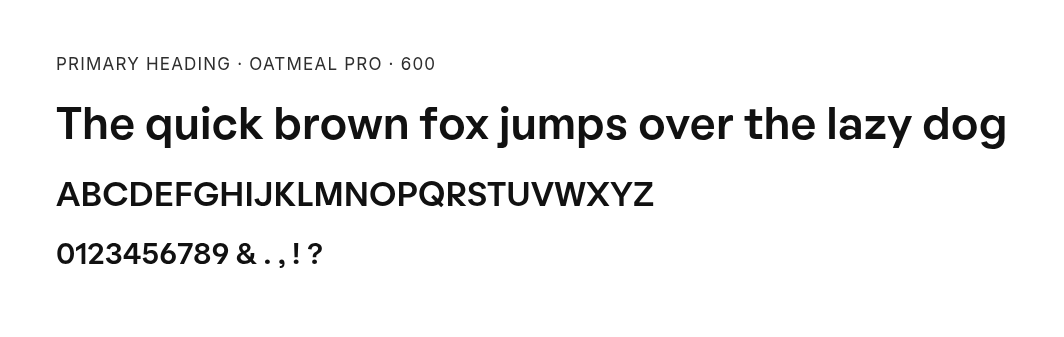
The first entry links to the font file a renderer needs; omitted refers only to inline delivery, and the file is still at the link. The second is the specimen above, so the model can see how the type should look. The guidance also named a gap: the heading spec calls for Oatmeal Pro at weight 700, but only the 400 and 600 files were supplied, so the Brief said to use 600 rather than fake a bolder weight or switch typefaces.
Assistants connect through the MCP quickstart, with setup pages and real runs for Claude, ChatGPT, Claude Code, Codex and Cursor.
Frontify, Bynder and Standards
These connect an agent to a brand system your organisation already runs, and the agent gets what that system publishes. The check that matters is whether the agent can find the material its task needs.
- Frontify MCP costs nothing extra once an account admin turns it on. Its default tool pack only reads; other packs upload assets, handle workflow tasks or export from templates, one pack at a time per account on the main URL. Its prompting guide says the connection isn’t scoped to one brand and its Content API doesn’t yet support semantic search, so name the brand and guideline you mean.
- Bynder MCP works within each person’s permissions. Its six guideline tools appear only with Bynder’s CX User Community product, so an agent can find a file without receiving the guidance that goes with it.
- Standards is on Pro and Enterprise, and its pages include colour values, type specs and image descriptions. By default, anyone with the tokenized link can query it; requiring sign-in is an Enterprise feature.
Any of these can run alongside Rainbrand in the same assistant, one for approved files and published pages, the other for a task’s guidance and a check. Rainbrand vs Frontify and Rainbrand vs Bynder go further.
Design, media and writing tools
These connect the agent to the tool where the work is made, carrying whatever brand is set up there:
- Canva MCP: its Brand Kit and template tools have access requirements.
- Figma’s MCP server suits an agent implementing an interface; voice, claims and campaign rules need another source.
- Media and writing platforms, such as Cloudinary for media, or Jasper, WRITER and Typeface when the work already happens there; check their documented tools.
Brandfetch: other companies' brands
Sometimes an agent needs someone else’s brand, such as a partner’s logo for a co-marketing page. Brandfetch MCP retrieves company logos and public brand information, and can sit in the same conversation as your own maintained brand. Rainbrand vs Brandfetch compares the two.
Companies that publish their own brand
The software company Pulumi publishes a server for its own brand, with tools such as get_brand_overview, get_logo and list_brand_assets and prompts for reviewing work against its guidelines. It’s a useful model for a company that wants outside agents to use its public brand, though it covers Pulumi alone.
Check what a server returns
Before you build a workflow on a server, check what it gives your agent for a real task:
- Write down what you expect back: selected guidance and files, guideline pages, a design or a public record.
- Open what comes back and confirm which brand it covers.
- Follow it into one finished piece of work, and see whether each step got the material in a form it could use.
For recurring brand work, run a small bakeoff: have your agent do one task it repeats, once with the server you use now and once with a Rainbrand Brief and Review, then compare what each returned, what went wrong and what you’d still fix by hand. To start, sign up and connect your agent.
More in AI tools
All 8 AI tools articles4 min read
How to give Claude Code and Cursor your brand, not just your design system
Coding agents read your design system and instruction files, but a landing page also needs your voice, product claims, imagery and logo rules. Keep code conventions in the repo, fetch the current brand for each task, and check the page before it merges.
3 min read
How to use ChatGPT for marketing and stay on brand
Use ChatGPT to research, draft, analyse and make campaign assets from real sources. Keep projects for campaign work, fetch current brand context through a connection, and check the deliverables before publication.
3 min read
How to use Claude for marketing without losing your brand
Give Claude a real marketing job, the sources behind it and current brand guidance. Use Projects, skills and connectors for their different jobs, then inspect the finished work before it goes out.